
A version of this was posted on Instagram 8/7/24.
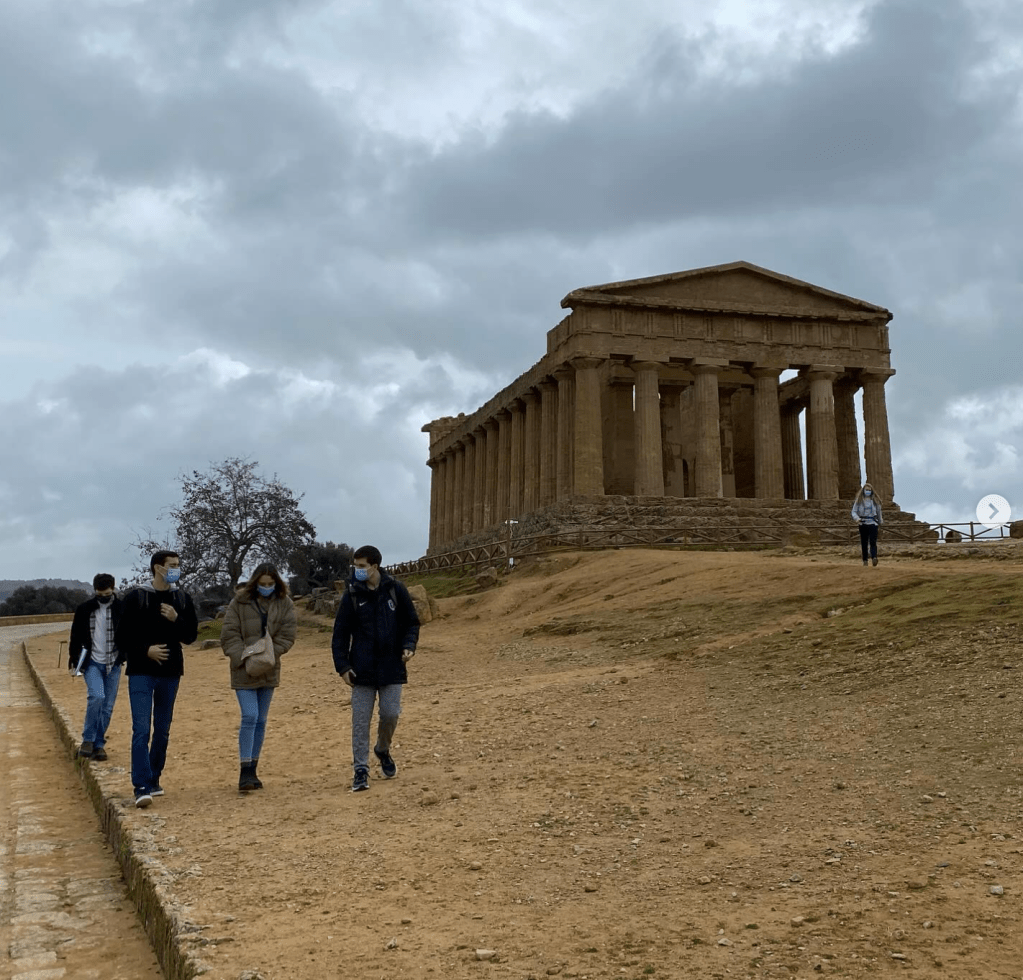
One of the first Greek philosophers to discuss color is Empedocles (c. 484-424 BCE) from Akragas (aka Agrigento) in Sicily. Unfortunately, with the exception of a possible fragment of his work Physika, his work comes to us primarily via citations by others. There are modern collections of work related to E. (including in a Loeb volume) including accounts of his life and teaching, citations of his works, and interpretations of or commentary on his work.
Among the most important ideas attributed to E. is the notion that all things are comprised of four roots or elements—fire, earth, air, water. These elements contribute to the color of things.
At least one ancient author quotes E. as identifying four colors (black, white, red, yellow), which would correspond neatly to the four elements. However, elsewhere in his extant writing E. only refers to black and white, linking them to water and fire respectively. Ironically these are not considered colors, strictly speaking, within the Newtonian understanding of color. However, they are fundamental to ancient color theory.
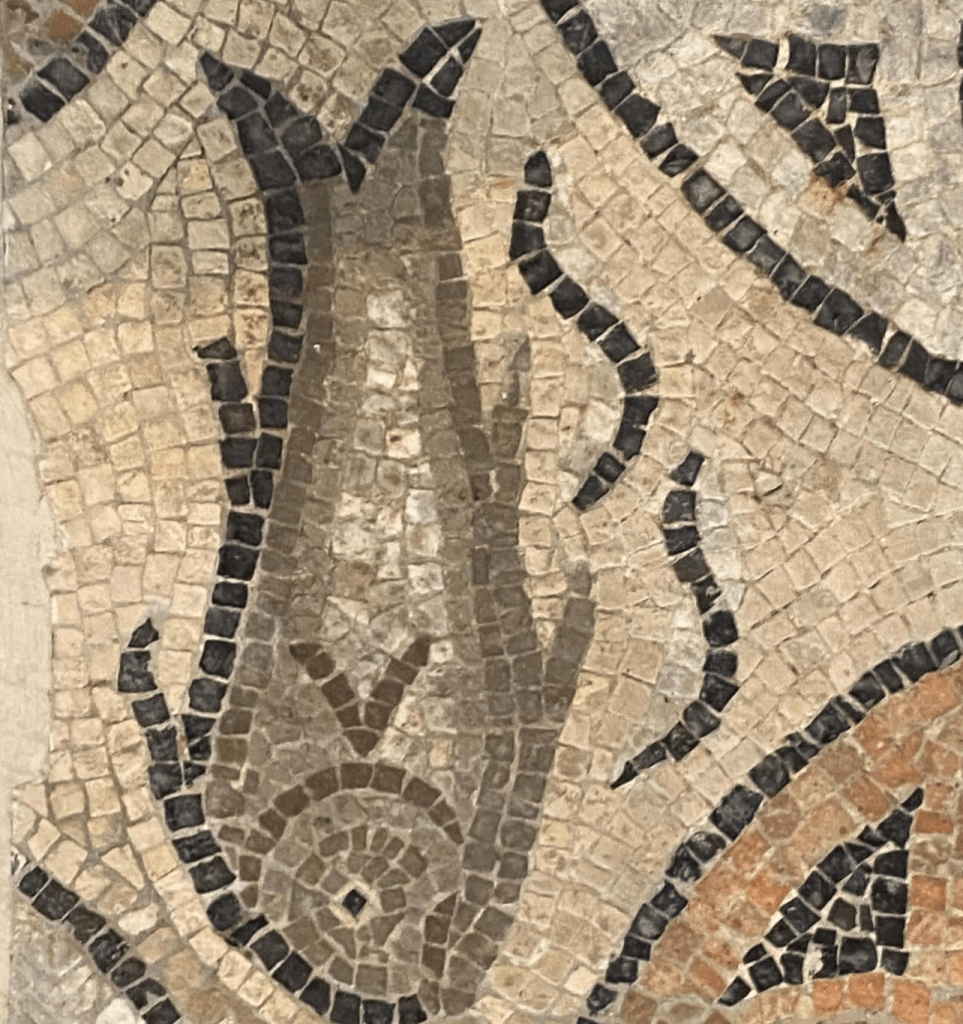
E. compares the creation of things from the elements to an artist who “mixes” colors. Professor of ancient philosophy K. Ierodiakonou explains that “mixing” should not be understood like blending. Rather, it refers to putting colors side-by-side. In some sense, this is similar to how the tiles of a mosaic are laid next to each other. Mosaicists were able to create the illusion of shading the this way. In other words, the elements that make up matter are not diminished or diluted when mixed to create another thing. For instance, E. explains that bones are 4 parts fire, 2 parts water, and 2 parts air. Because they are mostly fire, they appear white.


Images
1) skeleton mosaic from Pompeii; 2) a simple mosaic of a fish shows how placing different color tiles next to each other creates the illusion of dimension; 3) mosaic floor from Pompeii with the four colors supposedly mentioned by Empedocles; 4) classical Greek temple in Agrigento.
 Lynn R. Huber