Ancient Theories of Vision

Ancients operated with two general theories of vision. The intromission theory was based upon the idea that objects emitted effluences which moved through the air and impacted the eye. This idea is associated with Aristotle, and Democritus has a similar view. Democritus thought objects were comprised of atoms and the arrangement of atoms influenced whether a viewer saw an object as light or dark. In the case of things comprised mainly of the element of fire, the object would appear luminous.

Plato’s understanding of vision differs as he generally imagines a stream of fire emanating from the individual’s soul and through the eyes to “touch” an object. This is called the emission or extramission theory of vision. At the same time, Plato understands color as a kind of flame emanating from an object. Like Democritus, Plato is concerned with the shape and arrangement of the elements which comprise a thing. The differences in shape and arrangement change the nature of fire emanating from an object and, therefore, mean the viewer’s sight interacts differently with these different emanations. In fact, among the colors noted by Plato is “bright,” which we might think of as more of a quality of a color and not a hue.

Plato’s understanding of extramission and an object’s fire ultimately explains why people perceive colors differently. In other words, for Plato things have a kind of color intrinsic to their substance, but the viewer plays a role in perception. Moreover, colors can be dynamic and shifting. In fact, the word for purple was related to the word for swirling, according to Maria Michela Sassi.

Why does this matter for Revelation? 1. I think the material connection between things and their color (I talked about this in a previous post) helps us understand how ancients connected color and the nature of a thing. 2. Plato’s understanding helps us understand the dynamic aspects of John’s description of things that are bright.

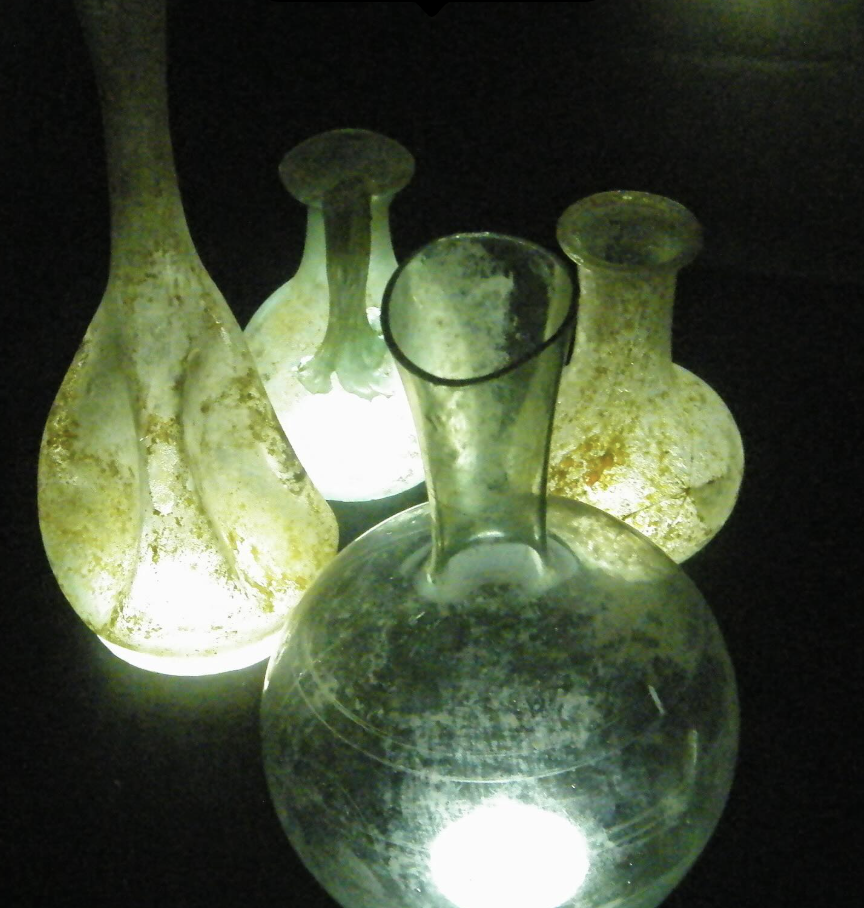
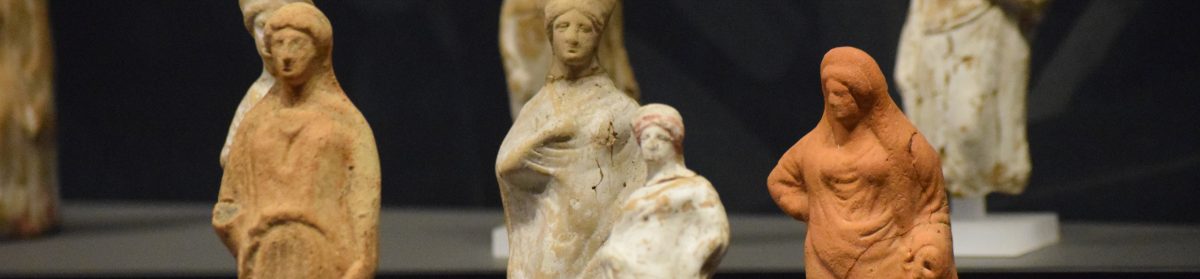
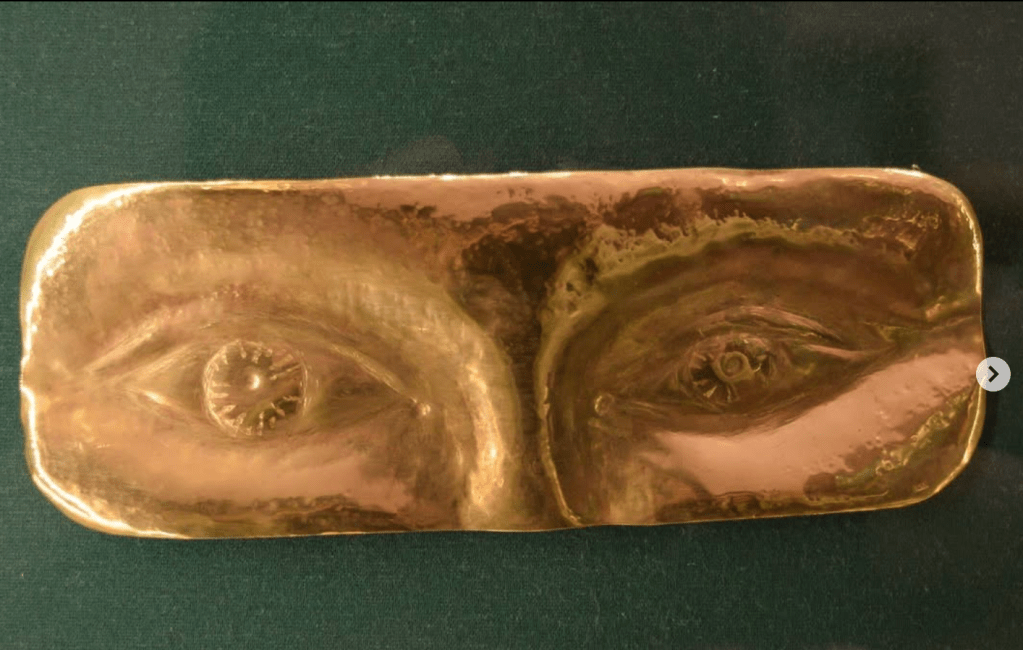
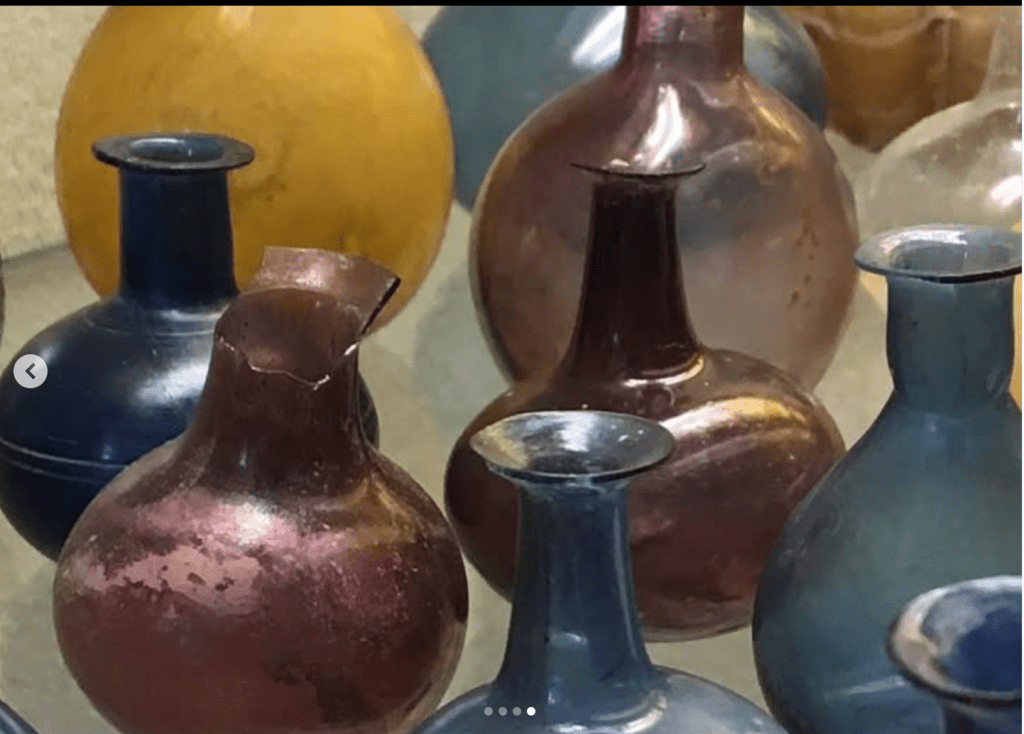
Images: 1) St. Lucy ex voto, Siracusa 2) burning candles 3) eyes of Roman statue head in Museo Nazionale, Roma 4) Roman glass, Aquileia.

Aristotle and Transparency

Originally posted on Instagram on 8/10/24.

Aristotle discusses color in two main texts, On the Soul and On the Senses. There is a text titled On Colors attributed to him, but it is likely by a follower. On Colors begins with an affirmation of Empedocles’ insight on the connection between the four elements and colors, whereas in On the Soul and On the Senses Aristotle articulates a more dynamic view of color, imho.

For Aristotle color fills and makes visible the transparent. The idea of transparency may seem odd when thinking about color, since we generally equate transparency with lack of color. However, for Aristotle, color by its very nature, color “can produce movement in that which is actually transparent.”

There is some disagreement about how Aristotle understands transparency. He might just mean things like water, air, and solid objects like glass and crystal. But professor of ancient philosophy Katerina Ierodiakonou notes that in On the Senses Aristotle implies that all objects can be understood as transparent and that color fills the transparent in a way that the boundaries or limits of an object can be seen. The color makes the limits of a defined object apparent.

In the case of things that are undefined and more transparent, such as water or air, a person can see brightness and/ or darkness. These qualities, which Aristotle identifies as color, shift depending upon the viewer’s distance from them, their depth, etc. In some sense, more transparent things, which hover between brightness and darkness, help us recognize that all colors are a mixture of light and dark. As Ierodiakonou explains, for Aristotle objects that are more transparency appear white, since they allow in some brightness (fire and air), while objects that are not at all transparent appear black. 

Images: 1) Roman Glass from Pompeii (Naples Arch Museum); 2) Crystals. Cefalu, Sicily. 3) A Roman glass vessel in the shape of a fish that is yellowish in color. British Museum. 4) Brightness and darkness in transparent colored glass. Bodrum, Turkey. 5) White agate intaglio with Athena and Mercury, Istanbul Arch Museum.